24 Apr 2020

New genetic changes are not implicated in antiepileptic medication-induced birth defects

Associate Professor Piero Perucca
is lead author on the study.
New research led by Associate Professor Piero Perucca from Monash University's Department of Neuroscience has found that there is no added risk of a child developing “de novo” variants — a genetic change seen for the first time in a family member — as a result of their mother taking common anti-epileptic drugs (AEDs).

This study is the first to investigate whether AEDs taken during pregnancy can increase de novo variants in a baby’s genes, which was previously thought to be related to birth defects associated with the drugs. 

COVID-19: We must stay the course, or risk undoing everything we've so far achieved

Reproduced from Monash Lens

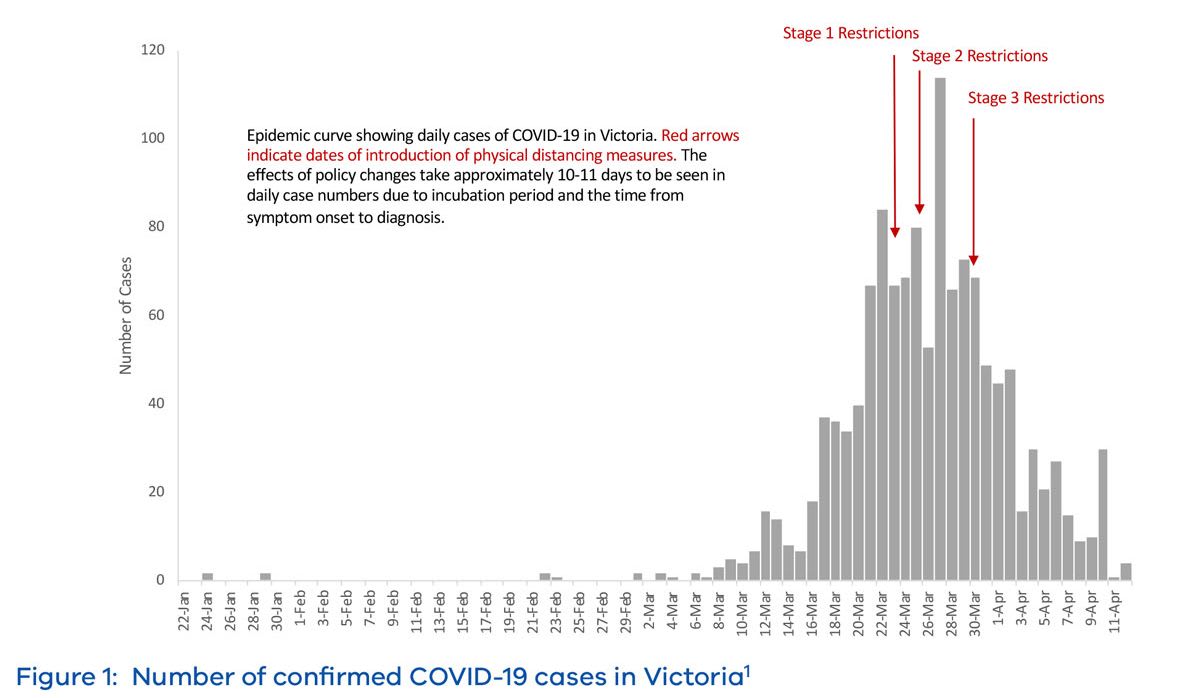
The COVID-19 pandemic is a narrative being told by its numbers. By ship. By city. By state. By nation. The world.

It’s measured by trajectory, and the trajectory of COVID-19 in Victoria has changed dramatically since Stage 3 restrictions were introduced in late March.

Neurological complications of COVID-19

Dr Robb Wesselingh in the lab
What does the coronavirus do to the nervous system?

The RACGP story by Doug Hendrie features comment from Dr Robb Wesselingh, Alfred Health neurologist and PhD student in Central Clinical School's Department of Neuroscience, on the emerging evidence that the new coronavirus can affect the brain and nervous system.

Neurological issues were recorded in more than a third of coronavirus patients in an early case series from Wuhan published in JAMA Neurology.

Vote for Ben Sinclair in the Famelab competition, by Sat 25 Apr 4 pm!

Dr Ben Sinclair explains in his Famelab entry video how the Reviver 
challenges people's balance and works their brains in the process.
Vote for your favourite here:  www.fwam.com.au/victoria-semi-final/
Dr Ben Sinclair (Early Career Postdoctoral Fellow, Department of Neuroscience iBRAIN unit) has been successful in reaching the FameLab* Victorian semi-finals - well done and congratulations Ben!

Ben is one of 13 semi-finalists together with two other researchers from Monash University. He is using a rehabilitation machine, called a Reviver, for people with impairments in their balance and mobility. The Reviver uses gravity and reflex muscle contractions to give people a strong workout, even those who can’t walk or move.

Voting is open for the public now. If you like Ben's the best, please vote and help him get to the National Finals. Share presentations on Twitter with hashtag #FameLabAus.

Congratulations to Cheng Lo, Sudip Paul and Amy Wilson on their higher degree completions!

L-R: Completed graduate research students Amy Wilson,
Cheng 
Hean Lo and Sudip Paul
Congratulations to our recently completed graduate research students, Cheng Hean Lo, Sudip Paul and Amy Wilson! Their degrees were conferred 16 April 2020. We wish them well for their future scientific careers.

Day (& Year!) of Immunology events, public lectures and more

Professor Nicola Harris is one of the speakers
at the 2020 Day of Immunology public lecture
on 15 May. RSVP here 
2020 is being a big year for immunological research. A worldwide scientific hunt is on for tests, prophylactics, treatments and vaccines for the deadly coronavirus, COVID-19. So the annual celebration of immunological research, the Day of Immunology, has never been more timely.

Monash University's Department of Immunology and Pathology is a major contributor to the event. Professor Nicola Harris, a research group leader in the department, will be one of the three speakers for the 15 May public lecture. RSVP here

Prof Harris will be speaking on worms! Not earthworms, but parasite worms such as tapeworms and hookworms, known collectively as helminths, which are transmitted by soil. When they get into us, they live in our gastrointestinal tract. We have a long evolutionary history of co-existence with these parasites, and our immune system has developed a variety of responses to these soil transmitted helminths (STH), and their interactions with our immune system and the intestinal microbiome.

Dr Runa Lindblom, LEGO Master!

Dr Runa Lindblom (left) with a team mate, working on the LEGO

challenge. Image: Channel 9
Dr Runa Lindblom, a recent PhD graduate from the Department of Diabetes, has a no-longer-hidden talent, which is building LEGO models. She had developed a brain tumour which had to be operated on, and in the process of recovery turned to LEGO. The turn was for the better, as she won a competition, then was recruited for Channel 9's LEGO Masters challenge.

See the Channel 9 story: 9now.nine.com.au/lego-masters/lego-masters-2020-runa-brain-tumour/0c306475-3a64-4513-b83f-51e6f9c13b18
Related Posts Plugin for WordPress, Blogger...