Showing posts with label autoimmune encephalitis. Show all posts

28 Feb 2022

Brain disease patients to benefit from CCS-led study: Rare Disease Day feature

L-R: Patient advocate Amanda and CCS researcher Dr Mastura
Monif talk about the experience of living with the illness and the
challenges of research into the disease. See video (2:19 mins).
Part of our special series for Rare Disease Day featuring patient advocates and CCS researchers 

The Department of Neuroscience’s Dr Mastura Monif is involved in research about Autoimmune Encephalitis, which affects 5-15 in 100,000 people. Autoimmune Encephalitis is a type of brain inflammation caused when the immune system mistakenly attacks healthy brain cells.  

25 Feb 2022

Central Clinical School participates in Rare Disease Day 2022

See video featuring patient advocates and CCS researchers
Hear from patient advocates and medical researchers as part of the Central Clinical School Consumer and Researcher Engagement (CCS CaRE) program for 28 February Rare Disease Day 2022. The diseases we talk about are Myeloproliferative Neoplasms, Autoimmune Encephalitis,  Friedreich's Ataxia, Visual Snow, Primary Immunodeficiency and brain cancer, including glioblastoma. We will be publishing our complete playlist on 28 February and will update this description with a link to the playlist.

See more:

22 Feb 2022

Brain wave signatures enable faster diagnosis of autoimmune encephalitis


L-R: Drs Mastura Monif, Nabil Seery and Robb Wesselingh

by Dr Loretta Piccenna

Researchers from the Neuroimmunology, Neurology, Neuroinflammation Laboratory led by Dr Mastura Monif in the Department of Neuroscience have identified electroclinical biomarkers that differentiate one particular type of autoimmune encephalitis (AE), known as N-methyl D-aspartate receptor (NMDAR) antibody-associated encephalitis (anti-NMDAR) from other subtypes of AE. 

AE is a brain inflammation disorder caused by antibodies. A person’s immune system mistakenly targets different proteins in their brain causing damage and inflammation. This can result in different neurological symptoms including seizures and memory problems. AE can be classified into different subtypes based on the brain protein targeted by the antibodies produced. 

22 Oct 2020

Autoimmune encephalitis: When your body attacks your brain, and people think you’re going mad

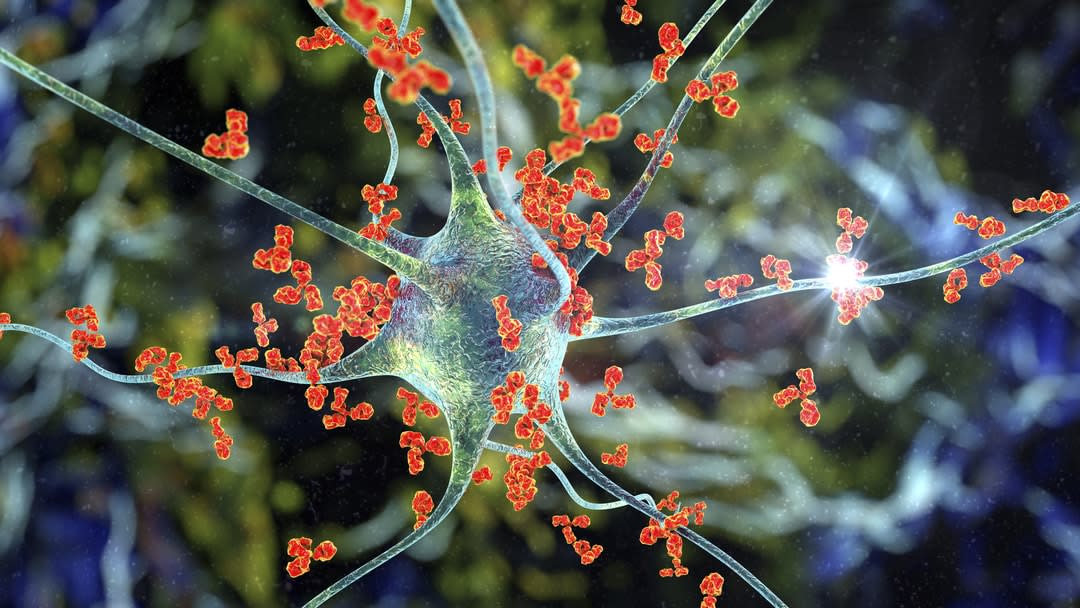
Antibodies attacking neuron.

It’s described as feeling like your brain is on fire. People with autoimmune encephalitis (AE) are often misdiagnosed as suffering from a psychiatric illness, delirium or dementia. The condition can mimic many other diseases, and hence there can be delays in diagnosis resulting in brain damage and a largely poor prognosis. The patients can be young or old, and the burden of misdiagnosed, late diagnosed or wrongly diagnosed disease can be high.
Related Posts Plugin for WordPress, Blogger...